Showing posts with label on. Show all posts
Showing posts with label on. Show all posts
Sunday, March 29, 2015
Diabetes Side Effects in Men and Women on Brain Eyes and Skin
Diabetes Side Effects in Men & Women
Diabetes is well known for its side effects. In this disease the patient not only need to take care of his/her diet but also take care of side-effects caused by diabetes. One major well known side effect is on fresh wounds, as it take a long time for clotting to happen. So major injuries can result in high blood loss. Here betterhealthfacts.com will tell you some other side effects of diabetes and precautions that you can use to get over them.Diabetes Side Effects
- In a diabetic person the sugar level might get low as well, so he/she should always keep some sugar product handy to eat (especially when they are out of your home).
- It takes longer to heal an injury. In diabetic person both clotting and healing process are slowed down. It might be 2 to 10 times slower than normal person. The speed of healing process also depends on your sugar level. It better to keep a first aid kit and dressing material handy. Avoid injuries but still if something happens wrong then dont wait for blood to stop, instead use the dressing material to stop the blood flow.
- Another side effect of diabetes is on eyesight . If at any point of time you feel blurred vision or continuous pain in your head then consult your doctor as it might be symptom of eyesight problem.
- People who dont take care of their diet and medicines instead of being diabetic, might face a kidney failure in their life. This is the worst thing that a diabetic person might face.
Dont get feared by all these side effects, as if you take a balanced diet suggested by your doctor and proper medication, then you can easily get over these side effects. The side effects discussed above are common in men and women. In next update we will discuss more about separate side effects of diabetes in men and women.

Friday, March 13, 2015
Summer Means Grilled Vegetable Salads and Things Im Thinking About on Tuesday 6 17 2014
 |
| Whole Wheat Orzo and Grilled Vegetable Salad with Feta, Olives, and Herbs |
Even though the official first day of summer is a few days away, lately I've been thinking of those things I love to cook in the summer but never make any other time of year, and grilled vegetables that get turned into salad are at the top of that list. I love grilled vegetable salads, and there are a couple on the blog that are my all time favorites, starting with the Whole Wheat Orzo and Grilled Vegetable Salad with Feta, Olives, and Herbs shown above. I could eat this all summer long! Two more grilled summer salads I'm equally crazy over are Grilled Sweet Potato Salad with Basil, Thyme, and Feta and Grilled Zucchini Greek Salad. Did you notice the common ingredient in these three favorite grilled salads? Yes, I do love Feta cheese and recently my favorite Feta cheese showed up again at Costco after I hadn't been able to find it for a couple of years. It doesn't take much to make me happy; finding that Feta at Costco again totally made my day, and the summer has gotten off to a good start.
Now, here are a few more things I've been thinking about . . .
Click to continue reading
Things Im thinking About on Tuesday 12 24 2013
 |
| Photo of Christmas Balls from All Things Christmas. |
It's Christmas Eve, and I'm spending a few days celebrating Christmas with my sister's family including some very cute kids. This may be a short edition of Things I'm Thinking About, but I do want to share a few Christmas things I spotted on the web, and of course I want to send out wishes for a happy holiday season to my wonderful readers. My life is enriched so much by the nice messages I get almost daily from people who are enjoying the healthy food. Happy Holidays everyone and thanks for your support of my blog! And no matter how you're celebrating this magical the season, I hope you'll be able to spend time with those you love, hopefully enjoying some good holiday food.
Click to continue reading
Chard and Garlic Scape Pesto and Things Im Thinking About on Tuesday 5 6 14
 |
| Spring has sprung, and I'm rushing the season and thinking about Garlic Scape and Chard Pesto. |
It's feeling a lot like Spring at my house, and even though I already complained about it once, can I say one more time that I'm feeling pretty serious garden withdrawals? At my old house I would probably have volunteer chard coming up in the garden by now, and one of my favorite things to make in the spring is Garlic Scape and Chard Pesto like you see in the photos above. If you like garlic, but don't know what Garlic Scapes are, use that link to go and read about them. Then hit up your local organic grocer or farmer's market and make some of this amazing pesto right away!
Don't get me wrong, I love my new house, and I feel more than blessed to have a house that's big enough that my enormous family can come here for a party. But I'm also optimistically making plans for a bit more gardening on-the-fly this year (until I can build a real greenhouse, hopefully this fall.) Tonight I told my neighbor across the street how I was just going to slip a few tomato plants in among the flowers in a sunny but sheltered spot by my garage. "The deer will eat them," she said, without even thinking twice. I guess we're going to find out whether deer like tomatoes, mint, and basil, because those are the three plants I've decided I have to at least try growing outside this year.
Now on to a few more things I'm thinking about . . .
Click to continue reading
Thursday, March 12, 2015
Learning Food Photography with White on Rice Couple and Things Im Thinking About on Tuesday 10 14 2014
 |
| Todd and Diane's huge collection of cutting boards, captured by iPhone! |
If you follow me on Instagram or Twitter you might have noticed that a few weekends ago I was enthusiastically sharing about a food photography workshop hosted by my good friends and amazing photographers, Todd Porter and Diane Cu of White on Rice Couple. I've heard Todd and Diane talk about food photography at several blogging conferences, so I knew the workshop held in their fabulous food photography studio outside Los Angeles would be informative, but I never imagined how life-changing it would end up being for me. Two days of listening to the experts, watching demonstrations, and practicing new shooting methods really got me thinking outside the box on my personal food photography journey.
Plus Todd and Diane had visited my house on the tour for their gorgeous cookbook, so they could help me with one of my biggest photography challenges, which is too many big windows in the rooms where I normally shoot. When I got home, I bought black foam core boards and clamps the very next day! A few food bloggers have been asking me about the workshop, so I thought I'd share some highlights and a few of my photos.
Plus Todd and Diane had visited my house on the tour for their gorgeous cookbook, so they could help me with one of my biggest photography challenges, which is too many big windows in the rooms where I normally shoot. When I got home, I bought black foam core boards and clamps the very next day! A few food bloggers have been asking me about the workshop, so I thought I'd share some highlights and a few of my photos.
Click to continue reading
Wednesday, March 11, 2015
Summer Means Tomato Salad with Goat Cheese and Things Im Thinking About on Tuesday 8 19 14
 |
| For years I've loved this Summer Tomato Salad with Goat Cheese, Basil Vinaigrette, and Fresh Herbs. |
It's tomato salad and tomato sandwich season, and even though my new town has a weekly farmers market where I've been stocking up on tomatoes, cucumbers, and zucchini, I can't get over how much I'm missing my garden. I love all the summer veggies, but tomatoes are the summer treat I wait for every year, and my favorite way to eat them is this Summer Tomato Salad with Goat Cheese, Basil Vinaigrette, and Fresh Herbs. I've probably been making this salad for at least 20 years and I never get tired of it. (The other two tomato salads I make over and over are Middle Eastern Tomato Salad and Tomato, Olive, and Fresh Mozzarella Salad with Basil Vinaigrette.) I'm savoring summer for at least another month here before I'm willing to even think about fall, so a lot more tomato salads are going to be on the menu!
And I'm seriously investigating the idea of a greenhouse so I can grow things away from the deer and other critters for next year. If anyone has greenhouse suggestions, I am all ears!
And I'm seriously investigating the idea of a greenhouse so I can grow things away from the deer and other critters for next year. If anyone has greenhouse suggestions, I am all ears!
Now here are a few more things I've been thinking about . . .
Click to continue reading
Tuesday, March 10, 2015
Just Be On Your Mat
 photo: shaletann
Yoga teaches you how to listen to your body.
~ Mariel Hemingway
I have a friend whos been chronicling her first 100-day foray into the Land of Raw Foods on YouTube. Its been a joy to witness the very visible physical and emotional transformation in her as shes fully engaged in a 100% raw, living foods diet. Her public sharing has been a source of inspiration to many whove watched her shed forty excess pounds and emerge a vibrant and vital young woman.
Long about Day 75 a troll showed up in the comments: "Stop fooling everyone into thinking you eat only raw foods. Youre too fat and youre giving the whole raw foods movement a bad name..."
Mr. Troll (read: toe jam, ignoramus, jerk) had much more to say before he was forcibly vaporized from cyberspace, but not before my own hackles went up. You see, I know that berating voice of the troll all too well – its taken up residence in my own head longer than I care to admit.
For years, I had a desire to do yoga. But I never acted upon the desire. Why? Because the voice in my head told me I couldnt possibly do yoga. I do not have a yoga body (translate: very thin, lithe body). I dont look like someone who does yoga is supposed to look. I have boobs. Hips. A belly. Cant wear a unitard or one of those midriff-exposing, little spaghetti-strap numbers.
Despite my size, I do have a very flexible body. I am still able to do the splits. And if I didnt have something resembling a small buddha belly that gets in the way, I could probably still take my right foot and place it upon my left shoulder. Really.
 Somewhere around my own Day 75, I discovered Mega Yoga™ – the first yoga program for curvy women – developed by plus-size model Megan Garcia. I got a mat and began the daily practice of hatha yoga in the confines of my own living room. My body loved it!
 After moving down the insurance charts from "morbidly obese" to "obese" (hey, Im fast approaching just plain ole "overweight" and you can bet were gonna have a party about it!), I kicked that freakin troll to the curb along with a good 85 pounds of fat and declared Im taking a yoga class! Screw the image of the perfect body Im supposed to have. Its all an illusion anyway. Some crazy preconceived notion Ive come up with to prevent me from doing 101 things because of the way I look (and feel).
I know all about the Mind-Body Connection. How you feel physically, determines how you feel mentally. How you feel mentally, determines how you feel physically. But my internal radar is waaaaaay off kilter. Whacked. Off the Richter scale.
So. I quelled the inner demons and signed up. Eight weeks. Yoga. With other people in the room.

photo: myyogaonline.com
I had totally prepared myself beforehand for the fact that I would most likely be the largest person in the room. My mantra the whole time I was driving there: Just be on your mat.
What I was NOT prepared for were the mirrors. Mirrors. Everywhere. What cruel and unusual punishment is this? Oh, the horror.
Panic. Breathe. Just be on your mat.
I stayed. I didnt go running out of the room.
Mountain pose. Upward Salute. Standing Forward Bend. Lunge. Plank. Staff. Upward Facing Dog. Downward Facing Dog. Lunge. Standing Forward Bend. Upward Salute. Mountain. Put them all together and you get a Sun Salutation. Flow through this sequence six times and you sweat like a pig. Not so pretty. BUT, I gotta tell you, it sure feels good. My body really likes this stuff.
The more Im able to practice and just be on my mat without the harsh self-judgments, the deeper and more intimate connection I have with my own body. Ninety whole minutes free from my mind wandering, planning, scheming, wishing, dreaming. Theres a Sanskrit term, Samadhi, that essentially means an ecstatic state of expanded awareness and complete freedom from suffering. A diet of raw, living foods and yoga is going to be my path toward experiencing Samadhi. I just know it.

Maya doesnt have a yoga body either. But that doesnt stop her.
Do you have a troll that takes up residence in your head? What does it say you cant do?
Sunday, March 8, 2015
Coconut Chili Lime Corn on the Cob—For Your Vegan Friendly BBQ

Happy 4th of July!
Corn on the cob is a favorite this time of year, especially as a side dish for your 4th of July BBQ. Unfortunately, it is usually drowning in butter. For a healthier and vegan friendly way to serve this popular food, try this easy recipe.
Instead of butter, the fat used in this recipe comes from virgin, expeller pressed, unrefined, organic coconut oil. This type of coconut oil has been extracted by methods that do not use harmful chemicals or high heat and is readily available at Whole Foods, Trader Joes or your local health food store.
There is much debate and even more confusion as to the health benefits of tropical oils. Coconut oil is high in saturated fat but has no cholesterol. Being saturated, it is a stable fat which makes it less likely to form harmful trans-fats when heated. Although there has been much negative press in the past about tropical oils, (much of it sponsored by the American Soybean Association and the Corn Products Company), the places in which coconut and other tropical oils are consumed on a daily basis do not have a high incidence of heart disease. Coconut oil is high in lauric acid, a medium chain fatty acid which the body converts into monolaurin. Monolaurin has antiviral, antibacterial and antiprotozoan properties.
That being said, coconut oil is high in calories and should be eaten in moderation. I get a bit concerned when I see the quantity of coconut oil used in raw food dessert recipes. In a recipe like this, however, a few tablespoons is a good alternative to butter.
***
Coconut Chili Lime Corn on the Cob [serves 4]
4 medium ears of corn, each cut into 4 equal pieces
2 tablespoons virgin, unrefined, organic coconut oil
2 tablespoons freshly squeezed lime juice, room temperature
1 teaspoon chili powder
1/2 teaspoon Himalayan or sea salt
Gently melt coconut oil (put on low power in microwave for 10 seconds or more). Mix with lime juice and salt. Put all 16 pieces of corn in a large bowl. Pour the lime, coconut mixture over the corn and with your hands, thoroughly coat each piece. Sprinkle the chili powder evenly over the corn and place on a BBQ grill at low heat. Cook on all sides for a total of 10 to 15 minutes.
Per 4 piece serving: 139 calories, 8 g fat, 6.5 g saturated fat, 0 g cholesterol, 3 g protein, 17.6 g carbohydrates and 2 g of fiber.
ONE WEEK RAW AND GLUTEN FREE Day 7 Learn To Make Raw Meatballs On Zucchini Ribbon Pasta!
 |
| Raw walnut meatballs on ribbons of zucchini with tomato sauce Follow Foods For Long Life on FACEBOOK ! DAY 7 OF "ONE WEEK RAW AND GLUTEN FREE" |
Today is the 7th and last day of our "One Week Raw and Gluten Free" mini cleanse. But it doesnt have to be the end. If you want to extend it a few more weeks, just repeat the recipes you enjoyed during the week. In case you missed any of them, check out DAY 1, DAY 2, DAY 3, DAY 4, DAY 5 and DAY 6.
Todays menu includes:
Breakfast: Strawberry, pear and spinach smoothie
Snack: Leftover pear and apple crisp from last nights dessert
Lunch: Monster salad
Dinner: Raw meatballs on zucchini ribbon pasta
Dessert: Mango and mixed berries
Breakfast:
Strawberry, pear and spinach "green smoothie"
(New Recipe)
Raw Vegan, Gluten Free
[makes 2 servings - enjoy both throughout the morning]
1 1/2 cup frozen strawberries or strawberry tops *
1 large or 2 medium organic pears, cored
2 cups organic, baby spinach
1 tablespoon unrefined flaxseed oil
1 1/2 cups filtered water
Place all ingredients in a VitaMix blender and process until smooth.
Per serving: 190.8 calories, 7.0 g fat, 0.5 g saturated fat, 3.7 g omega 3 and 1.0 g omega 6 fatty acid, 0 mg cholesterol, 2.3 g protein, 35 g carbohydrates and 8.3 g dietary fiber.
 |
| This green smoothie is high in fiber and omega 3 fatty acid. Spinach contains lutein and zeaxanthin which may decrease the risk of age related macular degeneration. |
 |
| * When I clean organic strawberries, I cut off the tops (which include a 1/2 inch of strawberry), freeze them and use them for smoothies. |
 |
| Todays snack is leftover pear and apple crisp. That is, if you didnt eat it all last night! Its sooo good!! |
Lunch
One of the best things you can do for your health is to eat some sort of salad every day of your life. Im not talking iceberg lettuce and thousand islands dressing. Im talking about a HUGE MONSTER salad with as many veggies you can stuff in a bowl topped with more healthful goodies like nuts, seeds and fruit. Todays salad contains many of the leftover ingredients from the recipes we made this week:
red leaf lettuce,torn
baby spinach
daikon, thinly sliced
carrots, thinly sliced
cucumber, thinly sliced
orange bell pepper, thinly sliced
red onion, sliced
broccoli florets
avocado, sliced
raisins
hemp seeds
sunflower seeds
sesame seeds
For the dressing, I had leftover ginger tahini dipping sauce from DAY 6 which I thinned with some freshly squeezed lime juice and a little water. If you ran out, make a little more!
So fill your refrigerator with veggies and experiment with combinations for lunch or dinner each day!
 |
| Todays lunch is a MONSTER salad with many of the leftover veggies from this weeks menus. |
Dinner
Today were going to make little raw meatballs. My poor Italian grandparents, were they alive, would think I was absolutely nuts! But these little guys, made from walnuts and other goodies, really taste meaty!
Were also going to make a raw tomato sauce for our zucchini pasta. When not on a raw cleanse, you can serve this delicious and healthy raw sauce mixed with hot pasta and the raw meatballs (at room temp) on top. They are too delicate to mix in or cook.
Ive posted this on the blog before (in fact it is one of the most "googled" recipes) but its improved and changed a bit to make it gluten free.
Raw Zucchini Ribbons with Walnut Meatballs and Tomato sauce
Old Blog Favorite - modified
Raw Vegan, Gluten Free
[makes 4 servings]
For the zucchini pasta
4 medium zucchini
Freshly ground black pepper
For the raw tomato sauce
1 clove garlic, peeled
1/3 cup sun dried tomatoes, soaked in filtered water for 1 hour, or until soft, and drained
1 Medjool date, pitted and soaked in filtered water for 1 hour and drained
1 cup ripe tomatoes, diced
4 kalamata olives
2 packed tablespoons fresh basil or 1 teaspoon dried
1/2 teaspoon sea salt
1/8 teaspoon crushed red pepper flakes (optional)
2 tablespoons extra virgin olive oil
For the meatballs [makes 12 small meatballs, 3 per serving]
1 clove garlic
1 1/3 cup raw English walnuts soaked for several hours and rinsed
1 tablespoon nutritional yeast
1 tablespoon extra virgin olive oil
2 teaspoons freshly squeezed lemon juice
2 teaspoons Bragg liquid aminos
1 teaspoon thinly sliced green onion, white part only
1 1/2 tablespoons fresh parsley, minced, plus extra for garnish
Make the zucchini ribbons by peeling the zucchini with a potato peeler, gradually rotating with each peel.
To make a thinner spaghetti, use a vegetable slicer. My favorite is Benriner. Wrap the ribbons or spaghetti in a paper towel until ready to use otherwise they will get watery when combined with the sauce.
 |
| Making the zucchini ribbons with a vegetable peeler. |
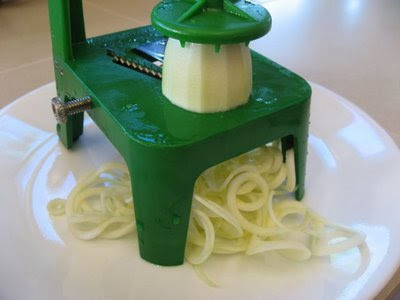 |
| You can make zucchini spaghetti by using a Benriner spiral vegetable slicer. Peel the zucchini first so it really looks like spaghetti! |
To make the sauce, drop a clove of garlic in the chute of a food processor with an S blade while its running. After it is minced, add the drained sun dried tomatoes and date along with the fresh tomatoes, olives, and the rest of the tomato sauce ingredients. Process until smooth, place in a small bowl and set aside.
 |
| Top with extra parsley and freshly ground black pepper and serve! |
Wash and dry the food processor.
To make the meatballs, drop a clove of garlic in the chute of the food processor while its running.
After it is minced, add the walnuts, nutritional yeast, olive oil, lemon juice and Bragg liquid aminos and process until smooth, scraping down the sides when necessary.
Place in a bowl and mix in green onion and parsley.
Form 12 small balls from the mixture, dip each one in tomato sauce to coat and set aside.
Mix the zucchini pasta in the desired amount of sauce. Serve onto 4 plates and top each with 3 sauce covered meatballs.
Garnish with parsley and freshly ground black pepper and serve immediately.
 |
| Tonights dessert is diced mango and an assortment of fresh berries |
True or False High or Low Protein Intakes Have Profound Influence on Testosterone SHBG Estrogen Cortisol Co
 |
| We are what we eat! Acknowledged, but does this also go for your hormones and different in protein intakes? Lets have another look at the contemporarily available research to figure that out. |
I know, anything else would have been a real shocker. What it wouldnt be, though, is a total surprise. If you dig through the available literature you can easily find data that would support the scientists assumption that doing an experiment "to investigate the effects of a controlled typical one day diet supplemented with two different doses of whey protein isolate on blood amino acid profiles and hormonal concentrations following the final meal" (Forbes. 2013) would be a good idea.
True or false? Certainly TRUE!
No, I am not kidding you! We do have plenty of evidence of direct interactions between chronic high vs. low protein intake and the production and metabolism of hormones, like testosterone, cortisol, their corresponding binding proteins, SHGB and CBP, and a whole host of other molecules that act like hormones, although we often dont call them "hormones". Examples? Well, here you go:
- Low protein = low SHBG (Longcope. 2000) - At least in the 1552 men in their "best age" (40-70 years) who participated in a study by scientsts from the University of Massachusetts Medical School the consumption of a diet that had less than the average 80g/day of protein in it lead to decreases in SHBG and corresponding increases in free (~bioavailable) testosterone. Age, dietary fiber, and smoking, on the other hand were positively correlated with SHBG.
- Chronically high protein intakes (40% of total energy) lower testosterone / cortisol ratio (Oi. 2001) - The highly significant increase in cortisol and corresponding decrease in the testosterone to cortisol ratio, Oi et al. report in a 2001 paper have luckily (a) been observed in rodents, only, and thats actually the main finding of the study (b) could be countered by the administration of garlic extract.
I can only speculate whether and to which degree the endocrine effects of high protein diets differ between rats and men (the Anderson study discussed below suggests they dont) - and you know I love facts and hate speculations and unsupported hypothesis. So I stick to an assumption I could support, i.e. the supposition that the improvements in testosterone, the researchers observed, when they fed their rodents garlic was mediated by its glutathione (GSH) boosting effects. These effects - and you as a regular SuppVersity reader know that are not "garlic exclusive". Whey protein, for example will also increase GSH (Bounous. 1989). Obviously whey doesnt increase your testosterone, but a "protein overload" from a glutathione boosting protein source may not have to be countered by GSH boosters in the first place.
Figure 1: In rodents, a high protein intake (40% of total energy from casein) will increase cortisol at stable T-levels and thus decrease the testosterone : cortisol ratio (Oi. 2001) - A high protein : carb ratio decreases total testosterone levels in man (Anderson. 1987) - Some people live by the principle that things that mustnt be. As a SuppVersity reader you obviously dont belong to this group of people and will thus be willing to accept that Anderson et al. were able to show that...
"[...] the testosterone concentrations in seven normal men were consistently higher after ten days on a high carbohydrate diet (468 ± 34 ng/dl, mean ± S.E.) than during a high protein diet (371 ± 23 ng/d1, p<0.05) and were accompanied by parallel changes in sex hormone binding globulin (32.5 ± 2.8 nmol/1 vs. 23.4 ± 1.6 nmol/1 respectively, p<0.01)." (Anderson. 1987)
As a SuppVersity reader you are yet also smart enough to know that this data is irrelevant, without adequately measured free testosterone levels: If we do the math and calculate the latter (obviously not 100% accurately), i.e. free testosterone on normal protein diet: 9.4 ng/dL = 2.01 % vs. free testosterone on high protein + low carb diet: 9.02 ng/dL = 2.43 %, the difference does no longer look so bad, anyway - does it?
This would not change the fact that youd suffered a -42% decrease of the testosterone : cortisol ratio from 60.5 to 35 which occurred in the Anderson study, when the participants were put on a meat, fish, poultry, egg white, and protein supplement based 44% protein, 35% carbohydrates, 21% fat diet.
Figure 2: Total (TT in ng/dL) and free testosterone (FT in ng/dL), SHBG (µg/L) and testosterone : cotisol ratio after one months on high protein + low carb vs. control (Anderson. 1987) - A high protein very low calorie diet can increase testosterone levels, but it will do so only if it is used to produce significant weight loss in obese adolescents, whose abundant body fat stores are gnawing away their androgens. In a corresponding study by Brown et al., the eight 11-15-year-old boys and girls where put on liquid (starvation) diets with a protein / carb / fat ratio of 67% / 28% / 5% that containing a total of 492-709 kcal per day.
As you can see in Figure 3 the significant reduction in body weight (13.5 kg total, 70-75% fat) went hand in hand with improvements in insulin sensitivity and the previously mentioned increase in total testosterone levels in the 14 year-old subjects 3 & 7 and the 18 year-old male adolescents (subject 6) - the only subjects for whom a complete testosterone panel was available.
Figure 3: Total testosterone levels (ng/dl; left axis) and insulin levels (in µU/ml) in 14 (subj. 3 & 7) and 18 year-old male adolescents before and after 5 weeks on low calorie high protein liquid diets (Brown. 1983) - High protein diets are driving forces of GH induced skeletal muscle IGF-1 expression (Sanchez-Gomez. 1999) - With IGF-1 being equally important to men and women, it does not matter that the "subjects" in the study at hand were female growing rats that received either a high- or a low-protein diet with crude protein contents of 222 and 83 g/kg respectively.
After 14 days on which the rodents were concamittantly injected with saline control, or growth hormone (rhGH) or recombinant human IGF-I (rhIGF-I) at dosages of 350 and 500µg/day, respectively, Sanchez-Gomes et al. observed that
...the low-protein diet alone reduced IGF-I concentrations in serum and in tissue taken from the gastrocnemius muscle as well as IGF-I mRNA from the same muscle, significantly.Learn more about IGF-1. - ...the high protein diet amplified the retention of injected rhIGF-I in the muscle tissues and was associated with significant improvements of the nitrogen balance
- Increased f 2-hydroxylation of endogenous estrogen with high protein diets could have cancer protective effects (Anderson. 1984) - Certainly far fetched but not impossible is the connection between the increased 2-hydroxylation of endogenous estrogen in response to high protein diets Anderson et al. observed in a 1984 study in male study participants and the significant association between lower ratios an the risk of breast cancer (Liehr. 1996).
It goes without saying that this is nothing but a hypothesis - a hypothesis that would yet be supported by a 1999 paper on "dietary predictors of breast cancer recurrence and death" by Saxe et al. which is based on one of the few papers that did not control for "meat" intake (you know that Pizza Salami qualifies as "meat", right?) in which each 5% increase in protein intake was associated with risk reductions of 18% for breast cancer recurrence and 44% for death in premenopausal women (Saxe 1999).
Table 1: Cox regression of energy-adjusted dietary predictors of breast cancer recurrence and death (Saxe. 1999)
And whats more, the fact that the associations were less pronounced in the post-menopausal study participants (the "low estrogen counterpart", if you will; see Table 1) only support the notion that the protective effects of protein may (at least in part) be mediated by its effects on estrogen metabolism.

Bottom line - Back to the Forbes study: In view of the conclusive evidence that the changes in total testosterone and cortisol are mediated by (a) changes in the amount of steroid binding proteins in the blood (albumin, SHBG, CBG), (b) weight loss / general health improvements and (c) the scarcity of dietary glucose on high protein diets, its not surprising that the glucose, insulin, testosterone, cortisol, and growth hormone levels of Forbes nine male volunteers (age: 29.6 ± 6.3 yrs), who participated in ...
References:
a control (C) condition of a typical mixed diet containing ~10% protein (0.8 g·kg-1), 65% carbohydrate and 25% fat;
"Protein Requirements of Dieting Strength Athletes: More is Better Only in the Presence of Adequate Carb & Fat Intake. Optimal Muscle Retention With 2-3g/kg Lean Body Mass " | more - a placebo (P) condition calorically matched with carbohydrate to the whey protein conditions;
- a low dose condition of 0.8 g /kg body weight whey protein isolate (W1) per day in addition to the typical mixed diet; or
- a high dose condition with 1.6 g/kg bw. whey protein isolate (W2) in addition to the typical mixed diet,
- Anderson, K. E., Kappas, A., Conney, A. H., Bradlow, H. L., & Fishman, J. (1984). The influence of dietary protein and carbohydrate on the principal oxidative biotransformations of estradiol in normal subjects. Journal of Clinical Endocrinology & Metabolism, 59(1), 103-107.
- Anderson, K. E., Rosner, W., Khan, M. S., New, M. I., Pang, S., Wissel, P. S., & Kappas, A. (1987). Diet-hormone interactions: protein/carbohydrate ratio alters reciprocally the plasma levels of testosterone and cortisol and their respective binding globulins in man. Life Sciences, 40(18), 1761-1768.
- Bounous, G., Gervais, F., Amer, V., Batist, G., & Gold, P. (1989). The influence of dietary whey protein on tissue glutathione and the diseases of aging. Clin Invest Med, 12(6), 343-9.
- Brown, M. R., Klish, W. J., Hollander, J., Campbell, M. A., & Forbes, G. B. (1983). A high protein, low calorie liquid diet in the treatment of very obese adolescents: long-term effect on lean body mass. The American Journal of Clinical Nutrition, 38(1), 20-31.
- Forbes, S. C., McCargar, L., Jelen, P., & Bell, G. J. (2013). Dose Response of Whey Protein Isolate in Addition to a Typical Mixed Meal on Blood Amino Acids and Hormonal Concentrations. International journal of sport nutrition and exercise metabolism.
- Liehr, J. G., & Ricci, M. J. (1996). 4-Hydroxylation of estrogens as marker of human mammary tumors. Proceedings of the National Academy of Sciences, 93(8), 3294-3296.
- Longcope, C., Feldman, H. A., McKinlay, J. B., & Araujo, A. B. (2000). Diet and sex hormone-binding globulin. Journal of Clinical Endocrinology & Metabolism, 85(1), 293-296.
- Sanchez-Gomez, M., Malmlöf, K., Mejia, W., Bermudez, A., Ochoa, M. T., Carrasco-Rodriguez, S., & Skottner, A. (1999). Insulin-like growth factor-I, but not growth hormone, is dependent on a high protein intake to increase nitrogen balance in the rat. British Journal of Nutrition, 81(02), 145-152.
- Saxe, G. A., Rock, C. L., Wicha, M. S., & Schottenfeld, D. (1999). Diet and risk for breast cancer recurrence and survival. Breast cancer research and treatment, 53(3), 241-253.
Exercise Quickie HIIT as 24h Muscle Builder for the Elderly Caffeine Without Ergogenic Effects on Biceps Curls
 |
| Caffeine wont do the "last rep" for ya. |
This time you can take a look at the surprisingly lasting pro-anabolic effects of HIIT as measured by skeletal muscle protein synthesis in the elderly and the similarly surprising finding that caffeine - even if its consumed in significant doses before a workout - will not have you curl an extra pound on either barbell or dumbbell curls.
Read more short news at the SuppVersity

Exercise Research Uptake Nov 14 1/2

Exercise Research Uptake Nov 14 2/2

Weight Loss Supplements Exposed

Exercise Supplementation Quickie

Exercise Research Uptake Jan 12, 2015

Read the Latest Ex. Science Update
- 27% increase in protein synthesis even 24h after HIIT exercise in the elderly - Resistance exercise (RE) and aerobic exercise are recommended for older adults for fitness and strength. High-intensity interval exercise (HIIT) is an understudied but potent potential alternative to aerobic exercise. A recent study from the McMaster University aimed to determine how each mode of exercise affected the integrated day-to-day response of muscle protein synthesis.
To do so, they recruited 22 sedentary men (mean age = 22; 67±4 years; body mass index: 27.0±2.6 kg m- 2 [mean ± SEM]) who were randomly assigned to perform resistance training, aerobic exercise, or HIIT. The participants consumed a stable isotope tracer (D2O) for 9 days. Daily saliva samples were taken to measure tracer incorporation in body water. Muscle biopsies were obtained on Days 5-8 of D2O consumption to measure tracer incorporation into muscle at rest, 24 hours, and 48 hours following each exercise bout: RE (3 × 10 repetitions: leg extensor and press, 95% 10RM), HIIT (10 × 1 minute, 95% maximal heart rate [HRmax]), or aerobic exercise (30 minutes, 55%-60% HRmax).
What the scientists found is quite surprising: While resistance training showed, as it was expected, the greatest increase in fractional protein synthesis immediately, post workout, only the HIIT protocol lead do significant increases in sarcoplasmic protein fractional synthetic rate 24-hour postexercise (2.30±0.34% d- 1 vs 1.83±0.21% d- 1).
Figure 1: Myofirillar (left) and sarcoplasmic (right) protein fractional synthesis rate (FSR) at baseline and postexercise. Data are means ± SEM. Bars bearing different letters are signifiantly different within each exercise group | AE = aerobic exercise; HIIT = high-intensity interval exercise; RE = resistance exercise (Bell. 2015).
That does not mean that HIIT is the better muscle builder, though. Specifically in view of the fact that its the myofibrilar, not the sarcoplasmic protein synthesis rate that bunks with aging (Balagopal. 1997), the higher myofibrilar post-workout protein synthesis after the relatively low volume resistance training session is more important than the long-lasting elevation of the protein influx into the sarcoplasma, a muscle protein fraction that is involved in the anaerobic ATP production, intracellular transport, and several other enzyme functions. - Stronger biceps with caffeine? No, ... at least during insometric contractions the administration of 5 mg/kg and 10 mg/kg caffeine does not have ergogenic effects on the elbow flexors.
Thats at least what the latest study from the University of Kansas shows. In their 13 recreationally trained male subjects, the ingestion of the aforementioned amounts of caffeine in form of of a caffeineated drink did not lead to significant increases in any of the relevant performance markers.
In contrast to previous research which has indicated that under certain conditions, caffeine may increase muscle force production during anaerobic activities (3,6,15,17). The results of our study revealed that caffeine did not significantly affect peak torque during the maximal isometric contractions. As Trevino et al. point out, this finding may result from a variety of factors:
Figure 2: Caffeine did not have significant ergogenic effects; at least the rate of torque development did increase, though (Trevino. 2015).
"Past equivocal findings with caffeine ingestion and anaerobic performance may have resulted from the type of muscle action and exercise performed, caffeine dose used, muscle group tested, or training status of the subjects. Our protocol used a single-joint isometric exercise to test the effects of caffeine doses of 5 and 10 mg/kg of body mass on maximal strength of the elbow flexors in resistance trained males (participating in at least 2 training sessions per week). Beck et al. (2006) reported that a 201 mg dose of caffeine significantly increased bench press 1RM in resistance trained males (participating in at least 4 training sessions/week).
Figure 3: In contrast to the study at hand a study by Beck et al. found significant increases in bench press performance in slightly better trained subjects (Beck. 2006). Because significant results were found with a caffeine dose less than ours (average absolute doses in the current study were 426.7 and 853.4 mg for the 0 and 5 mg/ kg body mass conditions, respectively), it seems that the exercise test and training status may have led to different findings between the studies" (Trevino. 2015).
Next to the training status and the lack of familiarity with performing maximal muscle contrations (the subjects in Beck et al. (2006) trained 4 times per week, the ones in the study at hand only two times), the exercise may play a role as well. The bench press is after all a multi-joint exercise requiring dynamic involvement of the pectoralis major, deltoid, and triceps. The biceps curl, on the other hand is the classic single-joint exercise, where the CNS activating effect of caffeine may simply offer less benefits than on bench presses, squats and other multi-joint exercises. The same may be true for comparisons of large and small muscle groups and could explain why Astorino et al. (2010), Jacobson, et al. (1992) and Kalmar et al. (1999) found beneficial effect of caffeine on the leg extension performance of their subjects, while Trevino et al. were not able to detect ergogenic effects for the small elbow flexors.
 |
| The Latest on Caffeine, Exercise, Fat & Weight Loss - Increased Performance, Energy Expenditure (6%) & Fatty Acid Oxidation (27%) vs. Decreased Sleep Quality & Burnout | Learn how caffeine can benefit your exercise performance and energy expenditure and how much caffeine is too much caffeine in a recent SuppVersity article. |
Similarly, the study by Trevino et al. which shows minimal, but non-significant beneficial effects of caffeine on the elbow flexors does not negate the many previously established beneficial effects of caffeine supplements on exercise performance. What it does, however, is to remind us that it is not possible to transfer the results obtained in one group of trainees on one particular muscle group 1:1 to another group of trainees and/or another muscle group | Comment on Facebook!
- Astorino, Todd A., et al. "Effect of two doses of caffeine on muscular function during isokinetic exercise." Medicine and science in sports and exercise 42.12 (2010): 2205-2210.
- Balagopal, P., et al. "Effects of aging on in vivo synthesis of skeletal muscle myosin heavy-chain and sarcoplasmic protein in humans." American Journal of Physiology-Endocrinology And Metabolism 273.4 (1997): E790-E800.
- Beck, Travis W., et al. "The acute effects of a caffeine-containing supplement on strength, muscular endurance, and anaerobic capabilities." The Journal of Strength & Conditioning Research 20.3 (2006): 506-510.
- Bell et al. "Day-to-Day Changes in Muscle Protein Synthesis in Recovery From Resistance, Aerobic, and High-Intensity Interval Exercise in Older Men." J Gerontol A Biol Sci Med Sci (2015).
- Jacobson, B. H., et al. "Effect of caffeine on maximal strength and power in élite male athletes." British journal of sports medicine 26.4 (1992): 276-280.
- Kalmar, J. M., and E. Cafarelli. "Effects of caffeine on neuromuscular function." Journal of Applied Physiology 87.2 (1999): 801-808.
- Trevino, Michael A., et al. "Acute Effects of Caffeine on Strength and Muscle Activation of the Elbow Flexors." The Journal of Strength & Conditioning Research 29.2 (2015): 513-520.
Saturday, March 7, 2015
How Big Corporations Target Toddlers To Teens 2013 Yale Rudd Center Study On Fast Food

The Elephant in the Room
Whatever side of the healthcare debate you are on, everyone can agree that we have a health crisis in this country. Obesity and all of its related diseases continue to rise. And while we focus on peoples access to doctors and medication, we ignore the elephant in the room. And that is that lots of people, from the time they are toddlers until the day they call 911, eat unhealthy fast food that eventually makes them sick. The money spent by fast food companies to develop these addictive products and the marketing dollars spent to get your family to demand them is staggering. Jennifer Harris and her team at the Rudd Center continue to study and report on this phenomenon.
Update by Yale Rudd Center
Three years ago I reported on a study by Yale Universitys Rudd Center for Food Policy and Obesity. I wasnt surprised how little fast food restaurants were concerned about providing adequate nutrition to their young customers but I was absolutely astounded when I saw the facts and figures on how these children are being targeted by fast food marketing. Have there been any improvements? The 2013 Fast Food FACTS analyzes 18 fast food restaurants - here are their findings.
Less than 1% of all Kids Meals Meet Nutritional Standards
Many fast food restaurants have added some token "healthy kids meal options" but most are in name only. McDonalds idea of increasing the nutritional value of their Happy Meals was to cut the order of fries in half and include a few apple slices. But we all realize that these restaurants are not a place to go for real food. The problem is that Americas children continue to beg to visit these establishments. Heres why!
Outrageous Amounts of Marketing Dollars Target Toddlers to Teens
The fast food industry spent $4.6 billion on all advertising in 2012, up 8% since 2009. Much of this advertising targets preschoolers, older children and teens and features the most unhealthy regular menu items.
This latest study revealed:
* Preschoolers saw almost 3 fast food ads per day.
* McDonalds advertised its Happy Meals 31 million times per month. Most of these ads appeared on CartoonNetwork.com, Nick.com, Roblox.com, and other kids websites.
* Teens are heavily targeted by fast food restaurants like Taco Bell, Sonic, and Startbucks.
* KFC, Subway, and Starbucks more than doubled display advertising on youth websites.
* Black and Hispanic youths, who are at higher risk for obesity and type 2 diabetes, are more heavily targeted.
Using Social Media to Poison our Children
Six billion fast food ads appeared on Facebook. They are so effective that this industry has exponentially grown their advertising on mobile devices, using things like smartphone apps to offer special deals. And they are effective.I just facebooked McDonalds and they had over 29 million FB likes and Taco Bells YouTube videos were viewed nearly 14 million times!
The Big Players
According to Nielsen (2012), 70% of all ads viewed by preschoolers, children, and teens were from six big players.They are:
McDonalds (largest number of ads viewed by children 2 to 5 and 6 to 11)
Yum!Brands, owner of KFC, Pizza Hut, and Taco Bell (the largest number of ads viewed by teens)
Subway
Burger King
Dominos
Wendys
Rudd Centers Conclusion and Recommendation
In three years, since their last study, they concluded that there were a few minor improvements made by the fast food industry but nothing significant enough to change the eating habits of our young children who tend to over-consume high-calorie, nutritionally poor fast food.
Jennifer Harris, the lead author of the report and the Rudd Centers director of marketing initiatives feels that these marketing efforts "often take advantage of young peoples vulnerability to marketing, making it even tougher for parents to raise healthy children."
The authors would like to see fast food restaurants significantly improve the nutritional value of the menu items offered to children. For example, healthy sides and beverages should automatically come with kids meals. Healthier menu items should be offered at a reasonable price.
Numerous specific recommendations are presented on how fast food restaurants should be restricted from their aggressive activities to market their unhealthy menu items to children of all ages.
Should More Be Done?
The fast food restaurants have done little to self regulate the marketing activities that are contributing to childhood obesity and the illnesses that will likely follow. So its really up to us to encourage this change. Three methods that come to mind are
* Stop frequenting these establishments or, when you do, purchase the healthier choices so the companies are encouraged to offer these items.
* Congress could pass legislation outlawing the advertising of junk food to children. This is very similar to the ban on cigarette advertising which had a direct impact on reducing the incidence of lung cancer.
* Educate people on the health issues associated with heavy consumption of fast food. This is also similar to when the surgeon general educated the public on the link between smoking and cancer. Should there be a warning label on each Happy Meal bag of fries?
Yes, everyone should have access to affordable health insurance but people should also have access to affordable healthy food. The idea that a company would spend billions of dollars targeting preschool children, older children, and teens, to eat food that can cause them a lifetime of illness is disgraceful. As the title of my book suggests, Health Begins in the Kitchen, not at the doctors office, not at your local pharmacy, and certainly not at your nearest fast food restaurant.
To read this important study by the Yale Rudd Center in its entirety, go to FastFoodMarketing.org.
An Apple A Day More Alex Leafs Reviews Folk Wisdom and Scientific Evidence on a Forbiddenly Healthy Fruit Item
 |
| Forbidden fruit or not: You got to love your daily apples ;-) |
Guestpost by Alex Leaf
An apple a day keeps the doctor away. I’m sure you’ve heard this before. And while there are many ways in which we could keep the doctor at bay with an apple (target practice anyone?), our wellbeing demands we eat the luscious fruit. Truthfully, the old adage could not be truer for a variety of reasons. So to keep things organized I am going to worm through the benefits of apples categorically. Also remember we are dealing with the apple fruit, not the apple fritter or apple flavored candy or the iPhone.I suppose the best starting point is the apple’s nutritional worth. As you can see in the nutritional label to the right, a single medium apple is less than 100 Calories and provides over 10% of the RDA for fiber. Apples also contain every vitamin needed by the body with the exception of Vitamin B12, which is only found in animal products, and Vitamin D, which you can produce by eating your apple under the sun. The same applies to minerals, with apples providing a little of everything except selenium.
A hearty bite for a healthy heart
If you have ever looked at an apple you may have noticed it resembles the humble heart, and for good reason. A comprehensive review of nine human studies conducted by researchers at the British Nutrition Foundation in London examined the effects of apples on cardiovascular disease risk factors and found that apple polyphenols, a type of antioxidant, have a positive influence on blood lipids and blood pressure in human beings (Weichselbaum, Wyness and Stanner 2010). Furthermore, don’t think that apple juice has you covered, since these compounds are most concentrated in the peel of the apple (Wolfe, Wu and Liu 2003). In fact, whole apples have an average of 57 times more polyphenols than commercial apple juice (Hyson 2011; cf. Figure 1).
 |
| Figure 1: Phenols in whole apples vs. juices (Markowski. 2005) |
I know that some of you are juice-o-holoics, so in case you still insist on juicing, keep the pomace and throw away the juice, not the other way around ;-)
Apples can help with weight management and protect against cancer
In a very recent study, researchers from the University of Navarra in Spain sought to determine the mechanisms through which the beneficial effects of apple polyphenols act on diet-induced obesity (Boqué, et al. 2013). Overall, they found that apple polyphenols exerted potent anti-obesity and anti-diabetic effects through prevention of fat cell growth, decreased intestinal glucose uptake, and increased fat breakdown. These effects were observed at both the surface and genetic level. The researchers even conclude their study with the acknowledgement that apple polyphenols can act “as a promising functional food ingredient for the management of obesity and its metabolic complications”.
 |
| Figure 2: Vitamin & Mineral content of one large apple relative to RDA. Data based on USDA food database for 09003, Apples, raw, with skin (USDA. 2013) - left; Nutritional label of one raw apple with skin - right (skipthepie.org. 2013) |
Apples can do even more!
The antioxidants in apples have been shown to extend the average lifespan of fruit flies by 10% (American Chemical Society 2011). Granted the relevance to humans is debatable, but it’s interesting nonetheless. Apple polyphenols may even provide protection against some autoimmune diseases such as ulcerative colitis and Crohn’s disease (Federation of American Societies for Experimental Biology 2011). Another unique compound found in apple peels, ursolic acid, prevents muscle loss during illness and aging, and “animals given ursolic acid also became leaner and had lower blood levels of glucose, cholesterol and triglycerides” (Cell Press 2011).
And it doesn’t end there. In a review and analysis of apples and related compounds, Dianne Hyson (Hyson 2011) from the Department of Family and Consumer Sciences, California State University concluded that, There are current data suggesting that [apple polyphenols] might be linked to reduced risk of several forms of cancer, cardiovascular disease, and asthma. [Apple polyphenols] may also have beneficial effects on outcomes related to Alzheimer’s disease, cognitive decline of normal aging, diabetes, weight management, bone health, and gastrointestinal protection from drug injury.
 |
| Red Delicious is king, when it comes to its antioxidant power. |
This makes sense when you think back to “eating the rainbow” in fruits and vegetables, since the above study also found the antioxidants to be five times higher in the skin than the flesh of the apples, and Red Delicious apples are renowned for their seductive red coating. It’s also better to go organic with this one as organic apples have on average higher antioxidant capacity than their conventional counterparts (Stracke, et al. 2009). So if you ever needed more reasoning for heading down to farmer Joe…
Emotional Eating
Have your head in the clouds from choosing to eat that apple with lunch? I’m not surprised, given that recent research has shown that eating fruit and vegetables may promote emotional wellbeing (White, Horwath and Conner 2013). More specifically, “on days when people ate more fruits and vegetables, they reported feeling calmer, happier and more energetic than they normally did" (IANS 2013). Even just eating apples in everyday life has been shown to reduce hunger and elevate mood (Macht and Dettmer 2006). Eating more apples isn’t challenging either. Actually, it’s as simple as buying a new fruit bowl. People are more likely to eat apples when they are visible and easily accessible (Privitera and Creary 2012). So keep your fruits close, and your apples closer. Especially during stressful times, as you may find yourself a little less anxious (Hyson 2011).
Promise me! Never throw away the pomace, if you insist on juicing your apples, then keep the pomace in whatever the result may be. This is where all the good stuff is and this is what made the difference between a 5% reduction in type II diabetes risk for apple eaters and a 8% increase in type II diabetes risk for apple (and other) juice drinkers in a recent analysis of three prospective longitudinal cohort studies by Muraki et al. (2013).
Bottom line (by Adel): If you are not convinced of the benefits of apples (not Apple!), yet, you may want to have a parting look at a study that made a direct comparison between statins and apples with respect to their cardio- and stroke-protective effects in otherwise healthy adults over 50 years.The results of the model the scientists fed with data from previous studies are quite astonishing: With a assumed compliance of 70% compliance in the "an apple a day" arm of the study, the scientists except a reduction in vascular mortality of 12%. Now, allegedly thats based on the estimate that this would be the necessary consequence of the "apple-induced" reduction in low density lipoprotein... but alas, its better than the hilarious and obviously 100% irrelevant witch-hunt on apples and other "high fructose fruit items" *rofl* - I mean, I find it "lustig" (German word for "funny") that people believe that someone would develop diabetes & NAFLD from eating whole apples.
- American Chemical Society. Eating apples extends lifespan of test animals by 10 percent. March 8, 2011. http://www.sciencedaily.com/releases/2011/03/110302121702.htm (accessed May 13, 2013).
- —. Red Delicious, Northern Spy Apples Have Most Antioxidants, Chemists Find. May 23, 2005. http://www.sciencedaily.com/releases/2005/05/050523234141.htm (accessed May 16, 2013).
- Boqué, Noemi, et al. "Prevention of diet-induced obesity by apple polyphenols in Wistar rats through regulation of adipocyte gene expression and DNA methylation patterns." Molecular Nutrition & Food Research, 2013: [ePub ahead of print].
- Cell Press. Apple Ingredient Keeps Muscles Strong: Component of Apple Peels Found to Help Prevent Muscle Weakening in Mice. June 7, 2011. http://www.sciencedaily.com/releases/2011/06/110607131718.htm (accessed May 13, 2013).
- Chai, S C, S Hooshmand, R L Saadat, M E Payton, K Brummel-Smith, and B H Arjmandi. "Daily apple versus dried plum: impact on cardiovascular disease risk factors in postmenopausal women." J Acad Nutr Diet 112, no. 8 (2012): 1158-1168.
- Cornell University. An Apple Peel A Day Might Keep Cancer At Bay. June 3, 2007. http://www.sciencedaily.com/releases/2007/06/070601181005.htm (accessed May 13, 2013).
Federation of American Societies for Experimental Biology. Scientists discover anti-inflammatory polyphenols in apple peels. December 15, 2011. http://www.sciencedaily.com/releases/2011/11/111130100455.htm (accessed May 13, 2013). - Gerhauser, Clarissa. "Cancer Chemopreventive Potential of Apples, Apple Juice, and Apple Components." Planta Medica 74, no. 13 (2008): 1608-1624.
- Hyson, Dianne A. "A Comprehensive Review of Apples and Apple Components and Their Relationship to Human Health." Advances in Nutrition 2, no. 5 (2011): 408-420.
IANS. Eating fruits, vegetables linked to emotional well being. January 30, 2013. http://cooks.ndtv.com/article/show/eating-fruits-vegetables-linked-to-emotional-well-being-321793 (accessed May 16, 2013). - Macht, M, and D Dettmer. "Everyday mood and emotions after eating a chocolate bar or an apple." Appetite 46, no. 3 (2006): 332-336.
- Markowski, J., W. Plocharski, and M. Mieszczakowska. "Effect of cultivar and processing on phenolics and antioxidant activity of apple products." I International Symposium on Human Health Effects of Fruits and Vegetables 744. 2005.
- Muraki, Isao, et al. "Fruit consumption and risk of type 2 diabetes: results from three prospective longitudinal cohort studies." BMJ: British Medical Journal 347 (2013).
- Nutritional Info: Raw Apple with skin. 2013. http://skipthepie.org/fruits-and-fruit-juices/apples-raw-with-skin/?weight=182 (accessed May 2, 2013).
- Ohio State University. An apple a day lowers level of blood chemical linked to hardening of the arteries, research suggests. October 2, 2012. http://www.sciencedaily.com/releases/2012/10/121002143220.htm (accessed May 13, 2013).
- Privitera, G J, and H E Creary. "Proximity and Visibility of Fruits and Vegetables Influence Intake in a Kitchen Setting Among College Students." Environment and Behavior, 2012.
Stracke, B A, C E Rüfer, F P Weibel, A Bub, and B Watzl. "Three-year comparison of the polyphenol contents and antioxidant capacities in organically and conventionally produced apples ( Malus domestica Bork. Cultivar Golden Delicious)." J Agric Food Chem 57, no. 11 (2009): 4598-4605. - U.S. Department of Agriculture. "USDA National Nutrient Database for Standard Reference, Release 26." 2013.
- van der Sluis, A A, M Dekker, A de Jager, and W M Jongen. "Activity and concentration of polyphenolic antioxidants in apple: effect of cultivar, harvest year, and storage conditions." J Agric Food Chem 49, no. 8 (2001): 3606-3613.
- Weichselbaum, E, L Wyness, and S Stanner. "Apple polyphenols and cardiovascular disease – a review of the evidence." Nutrition Bulletin 35, no. 2 (2010): 92-101.
- White, Bonnie A, Caroline C Horwath, and Tamlin S Conner. "Many apples a day keep the blues away – Daily experiences of negative and positive affect and food consumption in young adults." British Journal of Health Psychology, January 2013.
- Wolfe, Kelly, Xianzhong Wu, and Rui Hai Liu. "Antioxidant Activity of Apple Peels." J. Agric. Food Chem 51, no. 3 (2003): 609-614.
Subscribe to:
Posts (Atom)